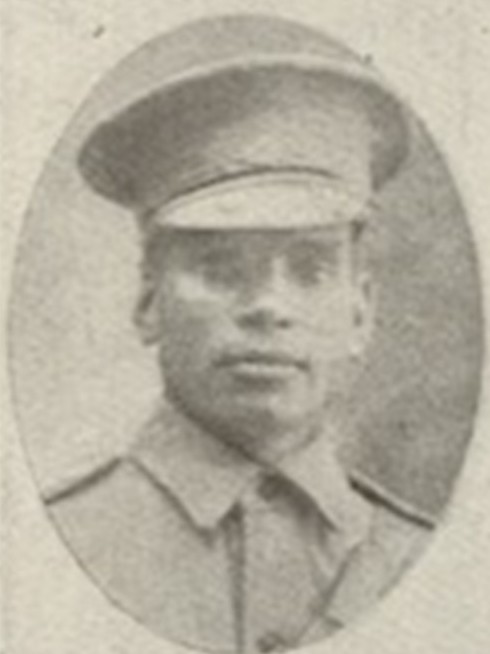
Veteran Story: Bertie Beckett (1893-1947) was living with his wife Annie Burton (nee Carlo) and their three children, at Barambah Station, Queensland in 1917. Bertie was among 17 Aboriginal men who were recruited during an 'extraordinary' drive by the Queensland Recruiting Committee on 14 May 1917, known as "Empty Saddles". The committee, represented by Reverend David Garland and the Chief Protector of Aborigines, John William Bleakley signed their attestation papers and arranged for them to travel to the training base at Enoggera. On 25 May 1917 these recruits were paraded during a rally in Queen Street, Brisbane where they were encouraged to mount riderless horses as a show of their committment. They were discharged 30 days later on 13 June 1917, for “having been irregularly enlisted” and returned to the mission under escort, with out any receipt of payment or discharge documents. Annie and Bertie went on to have at least six more children, including Herbert (Bertie) who served in the Second World War. Private Bertie Beckett volunteered in May 1915 to serve with the first AIF. Bertie was married with three children, living at the Aboriginal mission at Barambah, now known as Cherbourg. Bertie was among 17 Aboriginal men who were recruited during a drive by the Queensland Recruiting Committee on 14 May 1917.10 days later in Brisbane, during a patriot speech given by recruiting officer Lieutenant Colonel [Chaplain] David Garland, a line of Light Horsemen rode past each leading a riderless horse. The 17 recently recruited men from Barambah took up these mounts in a [staged] demonstration of their patriotism and paraded along Queen Street to ‘considerable cheering.’However their inclusion in the first AIF was short-lived. All 17 recruits were discharged just 30 days later on Wednesday, 13 June 1917, for “having been irregularly enlisted”.The men were returned home to the mission, under escort, with out any receipt of payment or any discharge documents.The AIF was brutal in its response when queried for their action – ‘a coloured man must have been associated with white people for some time prior to enlistment’ – and those who were considered too dark ‘would not make soldiers’.