Our Indigenous Heroes - They Also Served

Published 11 November 2019 9:11pm, By Shahni Wellington. Source: NITV News
This Remembrance Day we hear stories of courage, reflect on the treatment of Indigenous soldiers and find out more about recent official acknowledgement of their service.
Seventy-two-year-old Bundjalung man, Harry Brandy, remembers with a fond smile the day he boarded an airplane for the first time in 1967.
It was a QANTAS jet with hundreds of other soldiers and they were headed for the Vietnam War.
“And on the same plane that day, there was a very famous band – Herb Alpert and the Tijuana Brass. They were on the same flight!" Harry says.
“Did you know when you fly over the equator they give you a piece of paper saying you’ve crossed the equator?” he continues.
Warmed by his excitement for a new experience, I ask Harry if he was afraid of what awaited when he landed.
“You're not scared... But, you know, you're wondering what's going to happen,” he says.
After a brief stay at the Manila Air Base in the Philippines, Harry headed to the war in Vietnam.
He'd be stationed there for the next year.
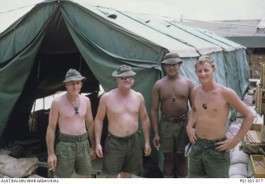
Harry Brandy stands with other members of the Australian Logistics Support Group in Vung Tau, Phuoc Tuy Province, South Vietnam in 1967. Credit: Australian War Memorial.
Growing up in Gulargambone, a small town about 380km north-west of Sydney, Harry says the Aboriginal community were discriminated against inside and outside the school classroom.
“The kids I went to school with, they decided that to help them there through life – they turned to escapism: alcohol and things,” he says.
“A lot of them died quite young. I thought to myself, ‘there’s gotta be something better than this.’"
So, at just 17-years-old, Harry asked his parents to allow him to enlist in the Army. Aside from being underaged, it was remarkable he was able to join at all.
A ban that officially prevented Indigenous Australians from joining the Australian Defence Force had only been lifted 15 years earlier in 1949.
Prior to that, the Defence Act (1903) prohibited Aboriginal people from military service because they were not of European descent. Unofficially, more than a thousand Indigenous soldiers served in the First and Second World Wars: Indigenous soldiers who still chose to fight for a country that otherwise denied them fundamental human rights and civil liberties.
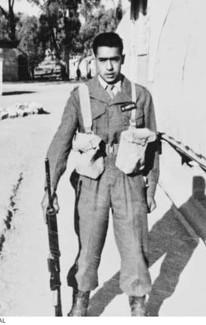
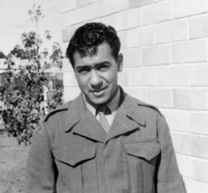
Mr Harry Brandy at 18 years old pictured in uniform with a weapon (1965) Credit: Australian War Memorial
In Vietnam, Harry soon realised the cruel realities of war, the kinds of experiences that left so many veterans, like Harry, living with post-traumatic stress disorder (PTSD) after returning home.
Harry says he still has flashbacks. One involves the day he survived an ambush.
"It was during a convoy trip, driving army vehicles and conducting services between stations," he explains.
“The guy that I was with was shot through the jaw, [the bullet] came through his mouth and smashed his shoulder blade.”
“That was my first taste of seeing someone in a bad way. It was real,” he says.
Despite witnessing such horrors and living with the related psychological fallout, today, Harry believes he made the right decision to enlist as a teenager all those years ago.
He says he thinks Indigenous and non-Indigenous people should consider the Defence Force as a career.
“I think it’s a good opportunity to try the Army – you don’t have to be a Philadelphia lawyer,” he laughs.